
A Practical Guide to Energy Systems | Cardio and Conditioning
Picking the right cardio for your goal


The truth with cardio is we can’t hack our energy systems. But you can learn them and become a cardio plug and play mastermind. Be able to sort through the eye wash on social media and get the results you’re actually after.
Energy systems in a nutshell operate on a sliding scale from anaerobic to aerobic. Alot of times people want to find a cardio hack, or misunderstand the desired effect or implementation of a cardio method. HIIT vs Circuit Training is a common misconception example. Another is the general, I need to be out of breath or dying to lose fat.
Of course your cardio lives in flux with your nutrition, lifestyle and other forms of exercise. So this is one piece of the puzzle but just remember if other sections aren’t clicking proper or improper you still may no see the desired results from your cardio/conditioning choice.
*Like most things in physiology, you can get really in the weeds with energy systems. I’d encourage you to do deeper research if this interest you as I’m attempting to do generalize for practical application. Thanks!
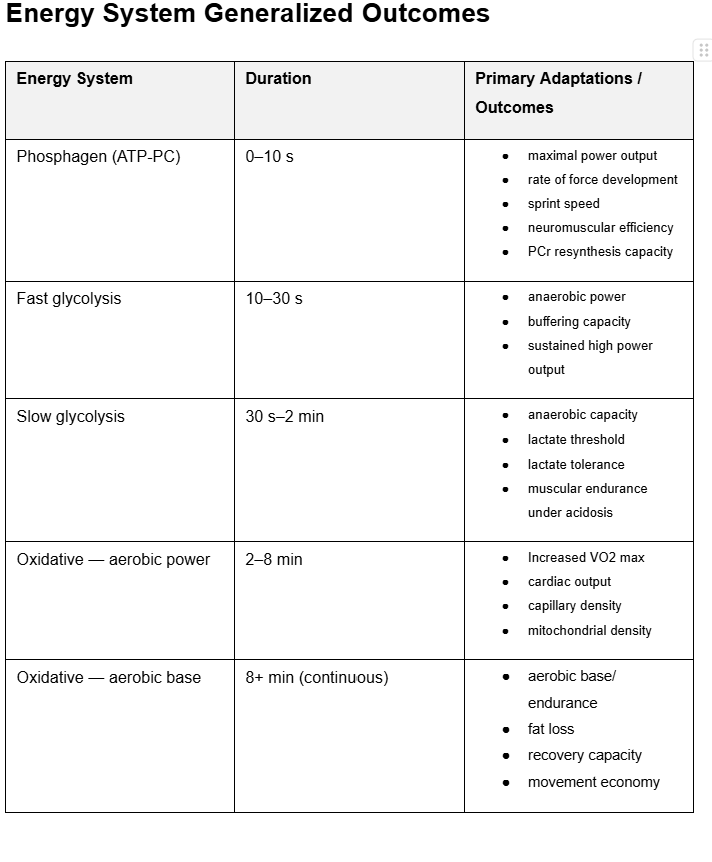
Above is a generalized list of what outcomes/goals you may have and what energy system will commonly help the most. Please refer to my intro to reiterate a complex amount of other factors in your health, lifestyle and fitness effect this. But all other things considered equal this should get you on the right path. It also does not mean training other systems will not have positive outcomes on other traits.
Ie: If you sprint a lot and eat a healthy diet, I bet you will lose weight without ever running a mile. There are many ways to skin it.
Phosphagen (0–10 seconds)
Rate: highest. Capacity: lowest.
This is max effort but brief task, think things like sprinting, jumping, throwing or max effort strength singles. It’s used up like a spark, then takes anywhere from 3 to 5 minutes to fully replenish. While you can still operate at a high level you won’t have that same peak as that initial burst. That is why power work needs long rest. Often times people will say “well i feel fine” it’s not exactly about how you feel here (although it’s still a useful tool in context). Anyone with a half trained aerobic base will honestly be bored doing proper phosphagen work.
Glycolytic (10 seconds–2 minutes)
Carbohydrate breakdown for ATP. This is the system most people mean by “conditioning”. It splits into two parts:
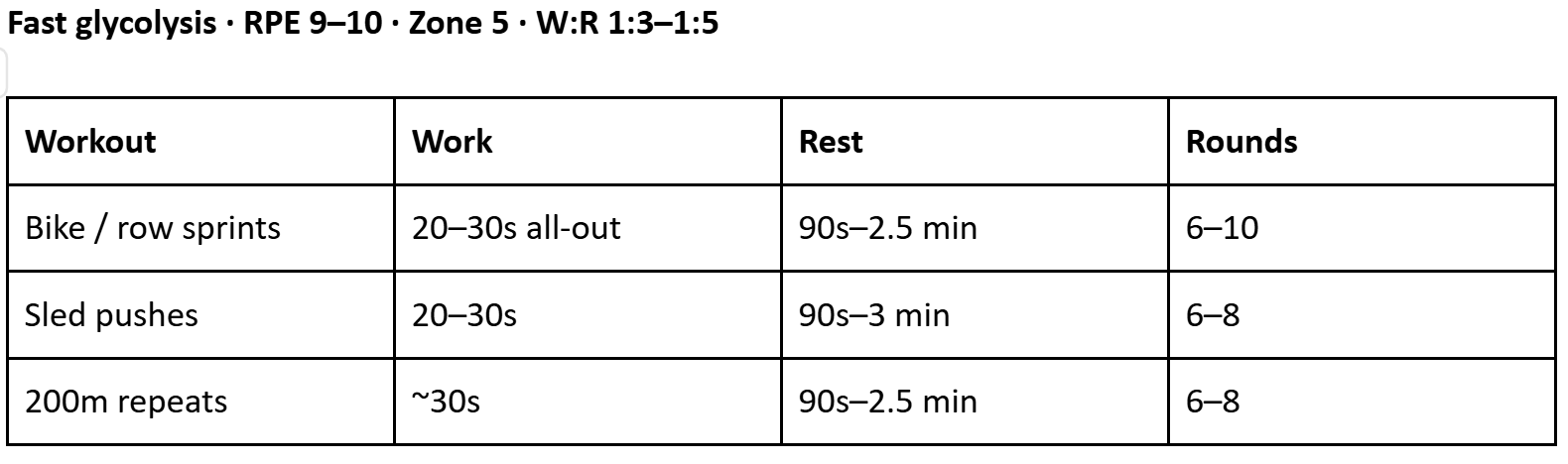
Fast glycolysis (~10–30 seconds) High power output but short duration, above lactate threshold. Think a 200m sprint or an assault bike spin out or hill climb, maybe a 3 rep max in a clean or strength movement.
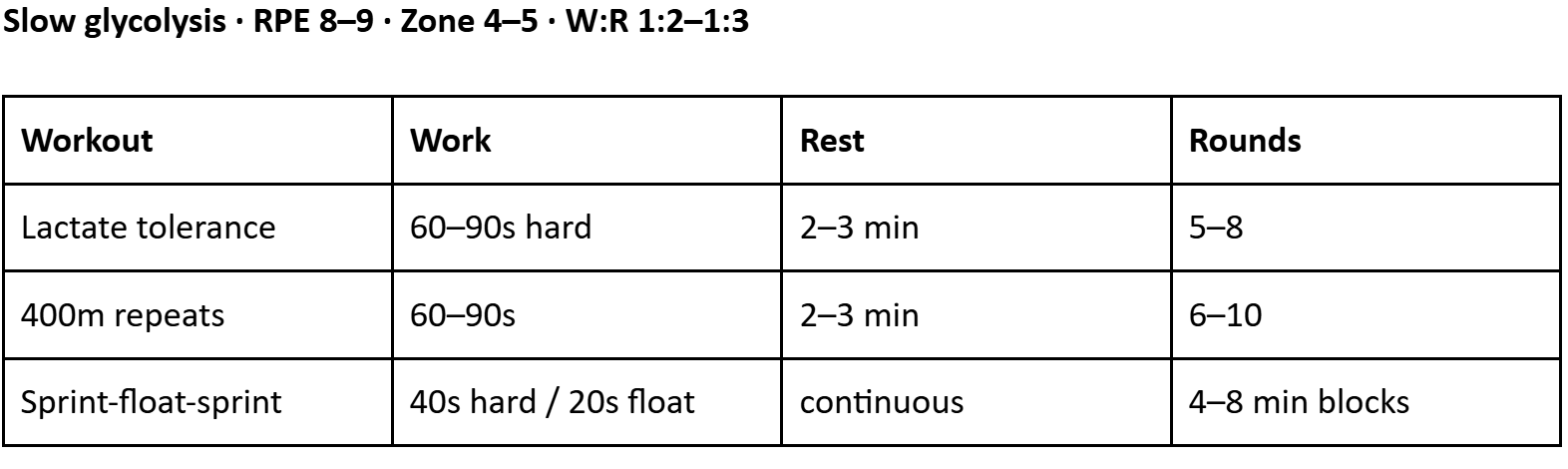
Slow glycolysis (~30 seconds–2 minutes) This is the ugly face, I hate my life zone. A 400m–800m MAX effort. The goal here isn’t peak power cause you just won’t be able to sustain it, but you should damn near try too. Not for the faint of heart.
Oxidative (2+ minutes)
Your aerobic system also splits:
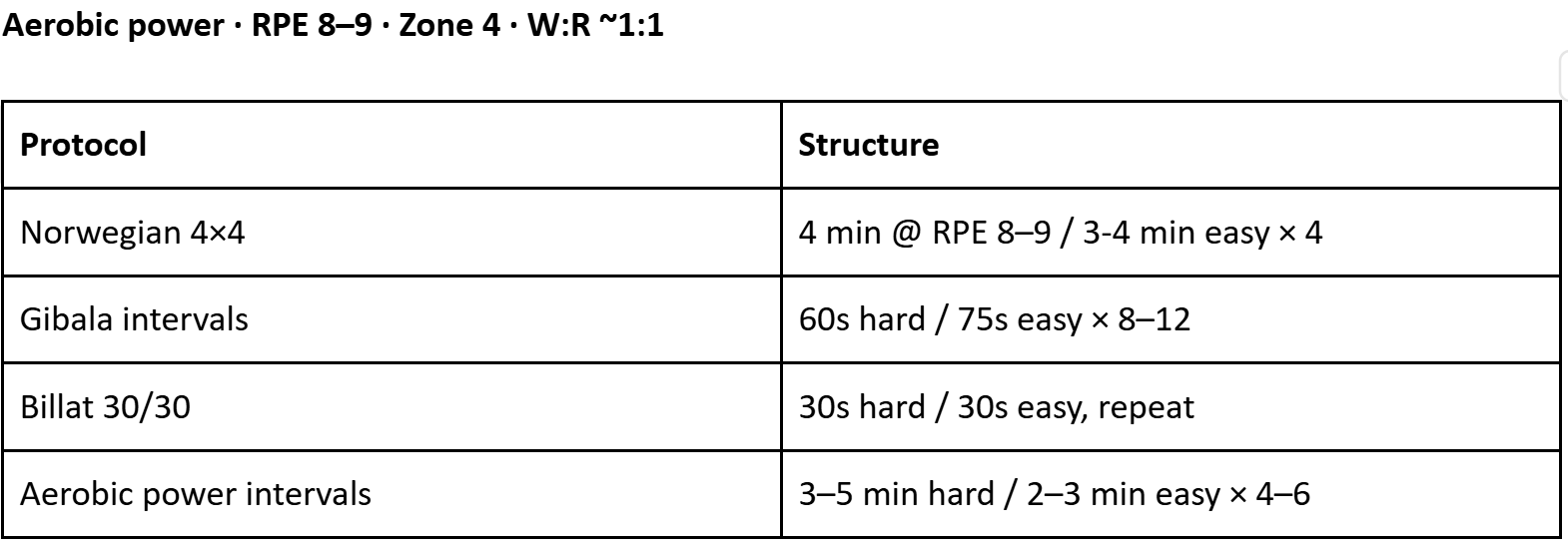
Aerobic power (2–8 min efforts) Big efforts near VO2 max with structured recovery. This is where you grow your ceiling. THIS IS TOUGH!
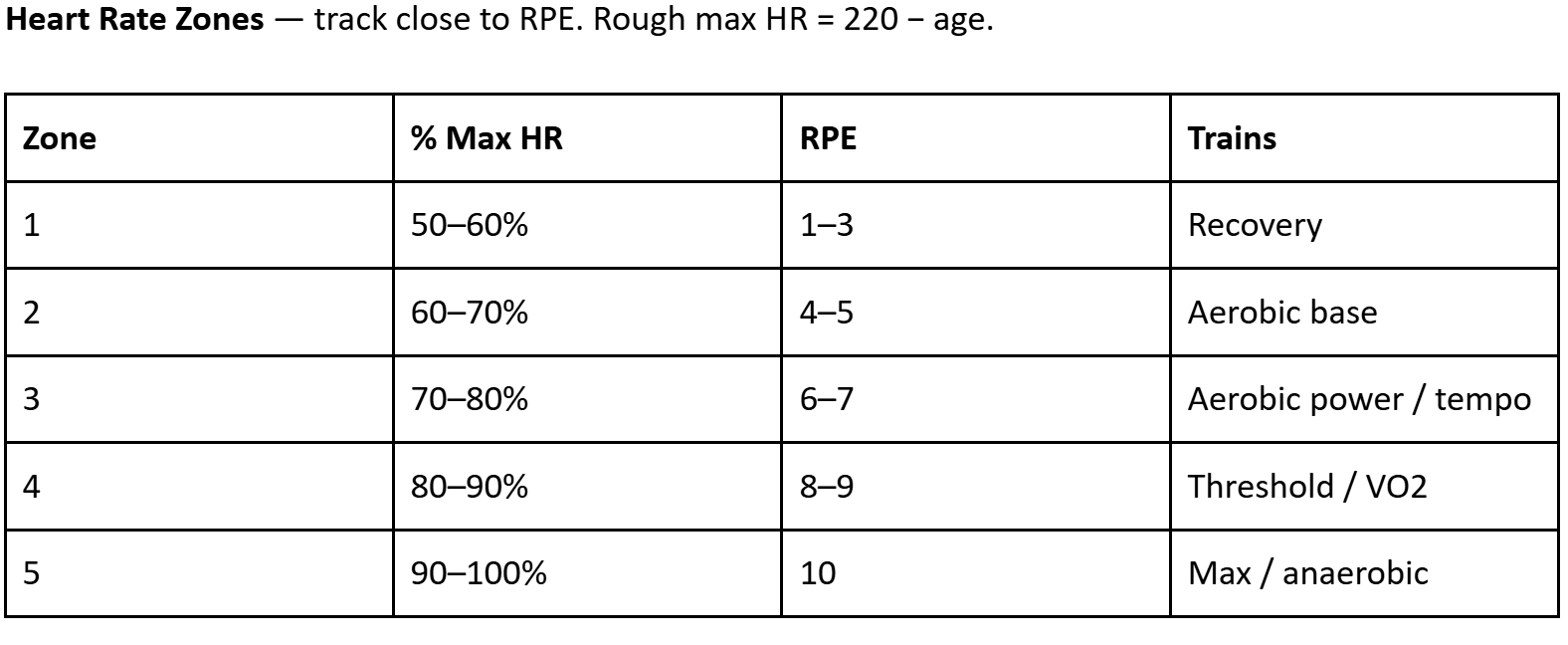
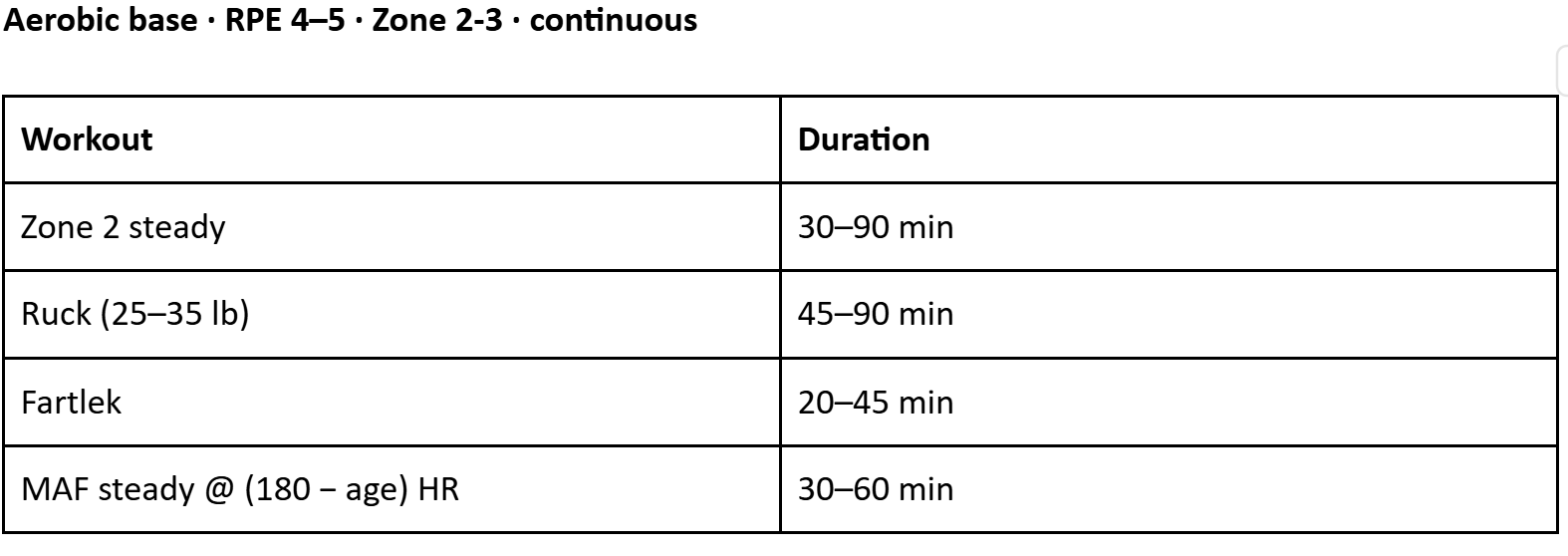
Aerobic base (continuous, easy) Zone 2, commonly referred to as LSD, long slow distance. A bigger base makes every other system better. Strength, Power, Pump it all will have some residual gainz from focusing on your base here.
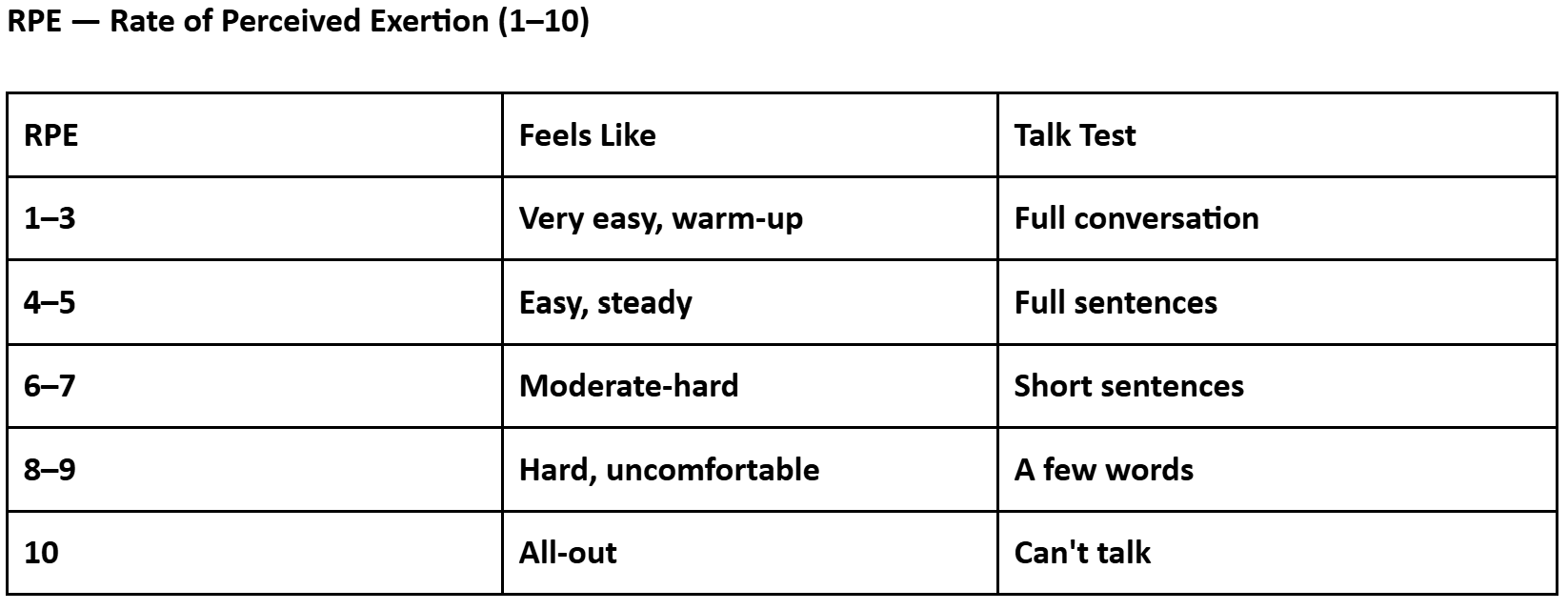
Effort Level
Can’t train the right system if you don’t have a common scale for it so let’s use these for effort.
Workouts By System
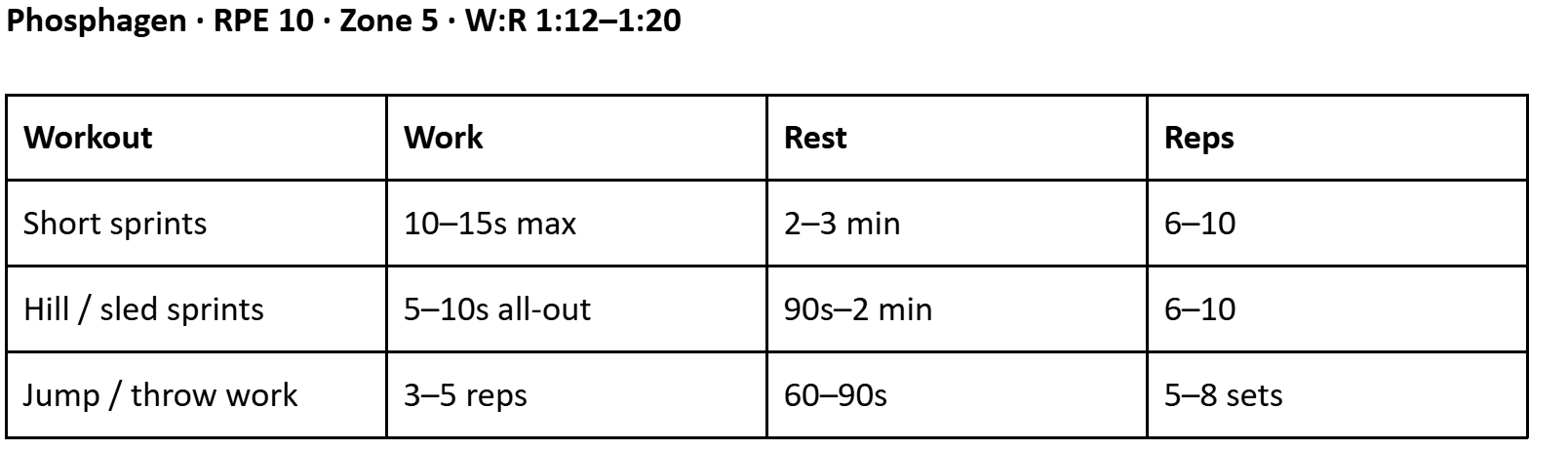
Ability Unlocked
This is where it gets fun and useful. With the info above you’re not tied to any specific modality. Sure certain styles of training are more conducive to certain energy systems but it certainly gives you a lot of variety. Cross training different modes of cardio also has a ton of benefits behind it but that’s a story for another day.
If I still haven’t convinced you well atleast it’s practical and adaptable. This can give you a lot of freedom and tools to call audibles in your own training or simply to train more effectively in general.
+1